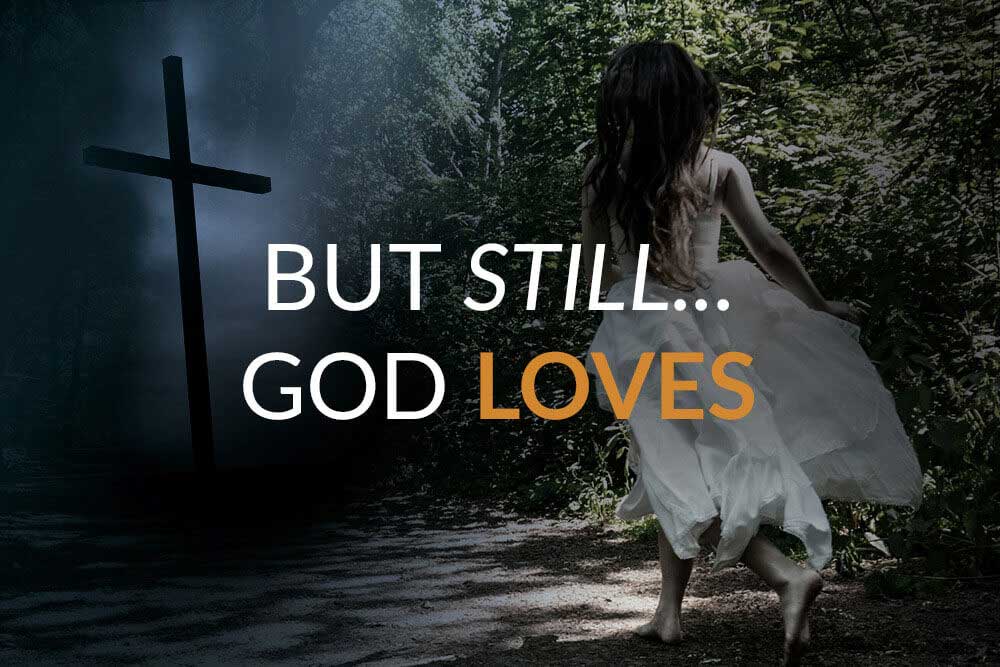
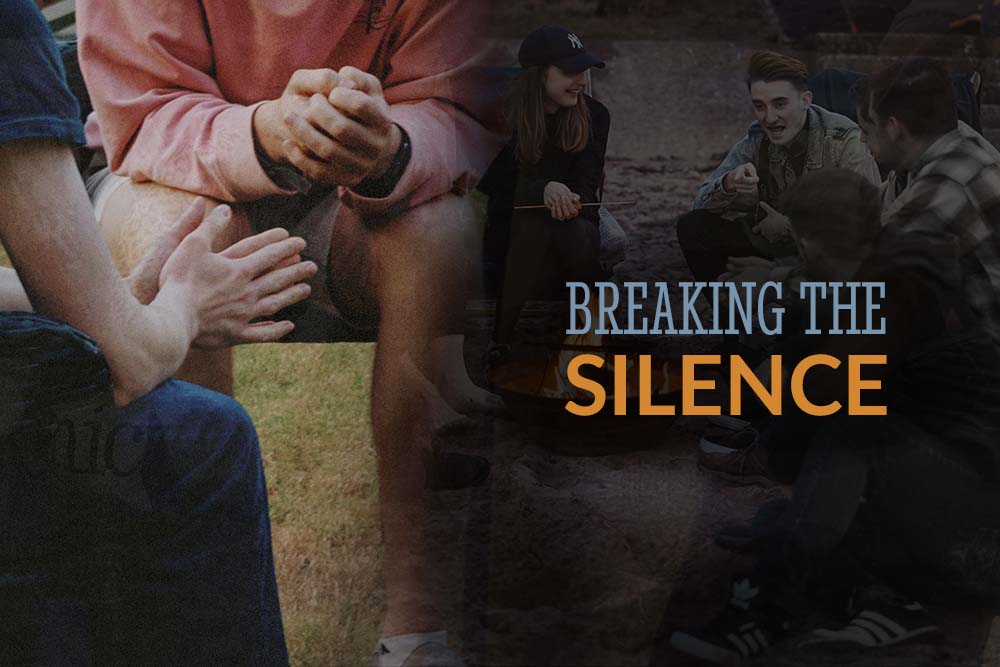
I used to believe that strength meant silence. Not because I thought I had it all together—but because I didn’t.

Maybe you’ve felt that too. Maybe you’ve felt like your sin—especially sexual sin—is what disqualifies you from talking, from leading, from being whole. But hiding your story doesn’t heal your shame. It preserves it. And it wasn’t until I started to tell the truth that I saw what God had been doing in it all along.

The Power of Being Seen—and Still Loved

I’ve talked to enough people to know this is more common than we let on. Some of you reading this are locked in a daily fight against pornography, sexual addiction, or a secret habit you swore you’d quit. Others of you carry wounds from someone else’s sin—betrayal, abuse, manipulation, or neglect. Some of you are exhausted because someone you love keeps running back into the same darkness, and you’re left holding the pieces. And there’s one lie Satan keeps selling to all of us: “You can’t tell anyone.”

But there is something terrifying and healing about being fully known. I’ll never forget the first time I told a friend that I was struggling with temptation and felt ashamed about things from my past. I expected pity or disappointment. Instead, I got a hug and a quiet word: “Me too.”

There’s a moment in John 4 where Jesus meets a Samaritan woman at a well. She’s had five husbands and is living with a sixth man. She’s coming to the well alone, in the heat of the day, because shame isolates. But Jesus meets her there. He speaks. He listens. He names her pain. And she runs back to town shouting, “Come see a man who told me everything I ever did!”

Not, “Come see a man who ignored my sin.” Not, “Come see a man who made me feel good.”  But: He saw me. And he didn’t run.

That’s the power of vulnerability.

It breaks the silence. It breathes. It invites others to look past the highlight reel and say, “Me too.” Her story echoes the apostle John, “Perfect LOVE is what drives out fear.” (1 John 4:18)

Why Your Story Isn’t Over—It’s Just Being Rewritten

Darkness will try to creep in when you tell your story. You may remember every reason why you stayed quiet: The moments you wish you could erase. The tears. The regret. The humiliation. But when God rewrites your story, he doesn’t delete the broken chapters. He redeems them.

I used to think I’d never be free from the shame I felt. Not just about things I did—but things I allowed. Things I failed to stop. Things that hurt others. I wondered if I could really be used by God. But over time, through confession, prayer, and people who refused to give up on me, I started to see something new: The cross of Christ doesn’t just forgive our sin. It reframes our entire story.

The Bible is filled with broken people whose stories don’t get erased—they get used.

We are not the sum of our worst moments. We are the sum of Christ’s righteousness, credited to us by grace. So if your story feels messy, welcome to the Bible. And welcome to the beautiful mystery of grace.

Why Telling Your Story Heals You (and Others Too)

There’s something deeply healing that happens when you go first. I’ve seen it again and again in my ministry. Someone stands up and tells the truth.

“I was addicted to porn.”

“I was unfaithful to my spouse.”

“I was molested.”

“I thought my worth was tied to my body.”

“I didn’t know how to say no.”

And suddenly, other people—who’ve been sitting in silence for years—start to breathe again. You see it in their eyes. Someone else said what they couldn’t. And now, maybe they can. Telling your story isn’t just therapy. It’s witness. It’s worship.

Revelation 12:11 says, “They triumphed over [Satan] by the blood of the Lamb and by the word of their testimony.” Not just by Jesus’ blood—but by the stories of people whose lives were changed because of that blood. Your story won’t save anyone. But it might lead them to the One who can.

Why Churches Must Be Safe Enough for Real Stories

Some of you aren’t hiding your story because you’re afraid of God. You’re hiding because of how Christians treated you. Maybe someone shamed you. Gossiped about you. Treated you like you were less than. Maybe a church leader failed to walk with you. Maybe you confessed, and instead of being led to grace, you were sent away.

I’m so sorry if that’s you. But that’s not Jesus. And it doesn’t have to be your future. Church should be the safest place in the world to tell the worst thing you’ve done. Not because sin is small—but because grace is bigger. I’m convinced we need more ministries, more small groups, more leaders, and more ordinary Christians who know how to listen with compassion and point people to the cross without flinching. We need churches that ask better questions, create real accountability, and walk patiently with sinners. Not every story needs to be told on stage. But every person should be able to say, “I’m not okay,” and know that they won’t be abandoned.

So… What’s Your Story?

You don’t have to start with a microphone. You don’t have to post it on the internet. But what if this month, you told one person the truth? What if you sat down with someone safe and said, “Can I tell you what I’ve been through?” Or, “Can I finally say out loud what I’ve been carrying?”

Or maybe, “Can I tell you what Jesus has done in my life—because it’s not just about me anymore.”

You never know who needs to hear that. I’ve had people come up after a sermon and say, “I thought I was the only one.” I’ve had family members thank me for saying what they couldn’t. I’ve had strangers open up because vulnerability breaks barriers. You don’t have to have a neat ending. You don’t have to pretend your healing is complete. You just need to be honest about who your Healer is.

Final Words: What You’ve Been Through Isn’t the End

What you’ve done—or what’s been done to you—doesn’t get the last word. Jesus does. If you’re battling sin right now, there is mercy.  If you’ve been betrayed, there is comfort. If your past still haunts you, there is healing. And if you’re afraid to tell your story, there is power waiting on the other side of your “yes.” I’m not perfect. But I’m not hiding. And maybe today is the day you stop hiding too. How? Because Jesus has you wrapped in his arms, and he won’t let you go. 


Jonny Lehmann is the lead pastor and instructor at Divine Savior Church in West Palm Beach, FL. 


Embrace the power of honesty, prioritize gospel responses, and create Christian environments filled with grace and truth.

Watch our webinar for individuals and small groups to create accountability in Christian community → 


This article continues from part one, The Unwanted Wife — And Why Her Story Might Be Yours. Read part one  → 

We can’t know for sure because Scripture does not say, but one could wonder if Jacob also struggled to know who he was

While seven years of service for the chance to marry Rachel might initially sound romantic, we can’t help but wonder if it wasn’t more about Jacob than Rachel. Was he willing to work those long years to love Rachel…or simply to get someone who made him feel better about himself?

The Bible tells us that the years flew by, but he never stopped watching the clock. At the end, he told Laban, “Give me my wife. My time is completed, and I want to make love to her.”

But on the wedding night, in the secrecy of a dark tent, Rachel was replaced with Leah. Jacob didn’t realize it until morning. How? Could it be that he wasn’t in love with Rachel—he was in love with the *idea* of Rachel? 

Though we can’t know exactly what was in Jacob’s heart, we know that false gods work like that. You think they’ll fulfill your deepest hopes, but they always disappoint. Perhaps you could think of it like going to bed with Rachel, but you wake up with Leah—unfulfilled, and unhappy.

Leah, too, was searching for love.

We’re told: “Leah had weak eyes, but Rachel had a lovely figure and was beautiful.” This isn’t about vision—it’s about appearance. Leah wasn’t pretty. She may have been cross-eyed, or simply unattractive. She wasn’t loved by her father. She wasn’t loved by her husband. She wasn’t enough.

And she knew it. We can feel her pain through the names she gives her sons. Her first son, Reuben, means “See, a son”—because God had seen her. But would Jacob? Her second, Simeon, reflects that God had heard her—but her husband still didn’t. Her third, Levi, was born in hope: “Now maybe my husband will become attached to me.” And still, she was unloved.

She tried to earn Jacob’s love through her children, even though she already had the love of God. She used her kids to medicate the pain of rejection. But then—something changed. With her fourth son, Judah, she says, “This time, I will praise the Lord.” Not: “Maybe now he’ll love me.”

Just: praise.


Leah finally got it.

She didn’t need a man to give her what only God could. That lesson—hard-won and heartbreaking—is one I wish every young woman today could learn.

Men often chase beauty, hoping sex will make them feel loved. Women often chase commitment, willing to settle for less in exchange for intimacy. Both end up making fools of themselves, trying to get from each other what only God can give.

But how do you break free from romantic lovesickness? You have to see the beauty of Jesus.

Leah—the weak, the rejected—was chosen to bring forth Judah, and through him, the Savior. God had mercy on her. And God chooses not the strong, intelligent, or beautiful, but the ones who know they are weak and ugly and in need of grace.

God took Jacob, the unwanted son, and Leah, the unwanted wife, and through them brought forth Judah.

From Judah came Jesus who gave up divine beauty and glory to become so disfigured and rejected that people couldn’t stand to look at him, who was more beautiful than Rachel, chose to become weaker than Leah—so that we, in all our spiritual ugliness, could become radiant in God’s sight.

It doesn’t matter how you see yourself. It doesn’t matter how others see you. Because of the ugliness of the cross, you are beautiful to God.

May that be the one love—the one relationship—that defines your life.


Brad Snyder is a pastor and instructor at St. Croix Lutheran Academy in West St. Paul, MN and serves as the chairman for Conquerors through Christ. 


See your true worth through God’s Eyes (Book Recommendation)

Conqueror’s through Christ reviewed the book The Search for Significance by Robert S. McGee and considers it a useful guide for those caught in the destructive cycle of self-condemnation or worldly success. “…the point is clear that Christ is the source of our security; Christ is the basis of our worth; Christ is the only one who promises and never fails.” (p. 24) Read our full review of The Search for Significance → 

Have you ever chased love that left you feeling used, unseen, or simply not enough?

Leah did too—and yet, God chose her to help bring Jesus into the world.

You might be living for romance, sex, or someone else’s approval—just like Jacob. You might be giving yourself away just to feel seen—just like Leah. But none of that will heal the ache in your heart. Only one love can.

Jacob worked seven years for Laban to marry his daughter Rachel. He had fallen deeply in love with her—so much so that those seven years felt like just a few days. When the time was up, Jacob went to claim his bride. Laban threw a feast, there was celebration, and Jacob spent the evening with his new wife. But when he awoke the next morning, it wasn’t Rachel by his side. “There was Leah”—Rachel’s older sister.

Why Leah?

Laban explained that it was their custom to marry off the older daughter before the younger—something that, you’d think, could have been mentioned sometime in the past seven years. Rachel stayed silent, waited out Leah’s wedding week, and then married Jacob too, in exchange for another seven years of labor.

And so Leah found herself in the middle of it all—consummating a marriage with a man who didn’t love her, who didn’t even realize it was her. And she stayed, not just for the week, but for life. She gave Jacob six sons, a daughter, and even her maidservant so that he could have more children she claimed as her own. She competed with Rachel to bear children for the man who loved Rachel more. She bought and sold the right to sleep with her husband. She was neither the deceiver nor the deceived—neither the lover nor the beloved. She had no identity of her own: daughter of a swindler, older sister to the beauty, first wife of a man who loved someone else. She was the mother of his children, but who was she, really? She was “Leah,” but what did that mean? “There was Leah” …but who was she?

Who are you? What’s your identity?

When someone says, “There you are,” who are they talking to? Are you defined by who you sleep with? By who you love? Or by who loves you? Are you defined by what you do? By what others do because of you? Are you the daughter, son, sibling, beauty, victim, or object of someone else’s affection or use? Who are you, really? And how can you know?

“There was Leah.” Why?

One reason is clear: Jesus.

Leah, the first and less-loved wife of Jacob, became the mother of Judah. And in both Matthew 1 and Luke 3, between Jacob and Judah, we find Leah—not named, but there. You and I know her name because of Jesus.

So—who are you?

I don’t know, and honestly, I don’t care who you’ve slept with or why. I don’t know what kind of person you are or what motivates you. I might not even know your name. But still—there you are.

Why? Because of Jesus.

For Jesus. In Jesus. Through Jesus. No matter what else you are, you are his. Bought with his blood—the blood that came from Leah’s line.

Many of us deeply crave the approval of others—even complete strangers. And the closer a relationship becomes, the more powerful and even idolatrous that approval can be. We care what peers think. We care even more what friends, family, and romantic partners think. These are good relationships, but they become dangerous when they become ultimate—when they compete with the love and affection that belong to God alone.

In a culture that downplays commitment and redefines marriage, Christians can react by swinging too far in the other direction, idolizing marriage as the pinnacle of life: love, family, kids, the white picket fence.

But Jesus never says that marriage will heal you. He never claims that romantic love will save you. He points to himself. Not the one who promises to spend their life with you, but the one who gave his life for you.

That is the relationship that defines your life—now and forever.

Jesus is the one who heals. He is the one who saves.


Brad Snyder is a pastor and instructor at St. Croix Lutheran Academy in West St. Paul, MN and serves as the chairman for Conquerors through Christ. 


See your true worth through God’s Eyes (Book Recommendation)

Conqueror’s through Christ reviewed the book The Search for Significance by Robert S. McGee and considers it a useful guide for those caught in the destructive cycle of self-condemnation or worldly success. “…the point is clear that Christ is the source of our security; Christ is the basis of our worth; Christ is the only one who promises and never fails.” (p. 24) Read our full review of The Search for Significance → 

When the LORD began to speak through Hosea, the LORD said to him, ‘Go, marry a promiscuous woman and have children with her, for like an adulterous wife this land is guilty of unfaithfulness to the LORD.’ So he married Gomer daughter of Diblaim…” (Hosea 1:2-3)

Hosea was God’s man.

God’s prophet. Set aside to do God’s work. And one of the things God had for Hosea to do was to marry Gomer.

God told Hosea to marry Gomer.

The thing is, Gomer was a prostitute. God had commanded Hosea to marry someone who had not been, and in all likelihood would never be, faithful.

Hosea was God’s object lesson.

Israel had rejected God and turned to idols the way Gomer rejected Hosea and turned to other men.

The result of the idolatry for the relationship between God and Israel was illustrated by the names of Gomer’s children:

  1. no faithfulness
  2. no love
  3. no relationship

With the object lesson of Hosea’s marriage, God said to Israel: “You want to know what your idolatry means? You want to know what it’s like? Idolatry is adultery. They’re the same. Your idolatry takes what’s mine and gives it away. You belonged to me. I married you. And you ran off with other gods. You threw away the relationship with me that I gave you. Israel, you have been unfaithful.”

And what did Israel deserve for their idolatry? What did Gomer deserve for her adultery?

By law, Hosea had the right to a quick divorce.

In today’s terms, he’d get the house, the car, and the kids. But Hosea had the right to more than that. He could have Gomer killed. Stoned to death. Brutally executed.

And God had similar rights over Israel.

God would have been totally justified in a quick divorce. A complete separation.

God could leave them to their gods of wood and stone and see how long they lasted. But more than that. God had the right to punish.

Idolatry is sin.

Sin deserves death.

Physical death, yes, but more than just that. Eternal death. Death in hell.

Instead, God tells Hosea to take back his adulterous wife.

Why? Why doesn’t God allow Hosea to treat Gomer the way she deserves?

Because God does not allow himself to treat Israel the way they deserve. No divorce. No execution. No separation. No eternal punishment.

The consequences of Israel’s sins were coming, but God was never going to abandon them. He would still remain faithful. He would still love. He would still call them his own. Despite what they deserved.

Is that not the perfect picture of mercy?

How did Hosea feel about being God’s picture?

Hosea was God’s man.

God’s prophet. Set aside to do God’s work. To marry Gomer and be betrayed and feel with his human heart something like what God feels about his people and about all people.


How did Hosea feel about being put through that?

How do you feel about it?

You are God’s person. Not a prophet, but you are set aside from the world by faith in Jesus to do God’s work. And every time you take a look at life through the eyes of faith you are putting yourself in a position to feel with your human heart something like what God feels.

The pain of knowing how people are separated from him by sin. The longing for all people to turn back to him. And the love that sent his Son to win them back. Faith forces you to see things the way God sees them. And it isn’t always pleasant. It is often heartbreaking.

Hosea was God’s man.

God’s prophet. Set aside to do God’s work. And to write it down.

Hosea ends his book with this very personal thought:

“Who is wise? Let them realize these things. Who is discerning? Let them understand. The ways of the LORD are right; the righteous walk in them but the rebellious stumble in them.” (Hosea 14:9)

Hosea knew that God is right. And he felt it.

By faith, he saw things from God’s perspective. Saw how right God is to detest what sin does to people. How right God is to treat us infinitely better than we deserve. And Hosea got to be right, the way God is, in his own treatment of Gomer. And I doubt that felt good. But it must have felt right.


But he didn’t need to, right?

I know God told him to and that’s why Hosea married Gomer, and then Gomer’s unfaithfulness to Hosea could be the object lesson for Israel’s unfaithfulness to the Lord. But Hosea didn’t need to marry Gomer to make that point. That point is made nearly everywhere else in the Old Testament.

Idolatry equals adultery.

By the time we get to Hosea, God has already said idolatry equals adultery several times. And for none of those other times did God require his prophet to marry an adulteress and suffer all the suffering that comes with being married to an unfaithful partner.

And Gomer didn’t have to suffer through the public shame of being an adulteress. A shame that has been public for thousands of years now. It didn’t have to be. It all seems so unnecessary. I’m sure it would have seemed especially unnecessary to Gomer.

I’m not going to pretend to know anything about the decisions that go into pursuing a life of prostitution. I doubt Gomer was happy about her profession. It seems safe to assume that she got the job out of necessity. Her career was about survival, not about professional growth. 

That being said, she was surviving. There was enough shame in it that Gomer was probably left alone for the most part. And she was probably rather desensitized to all of it.

You’d have to be, wouldn’t you? You couldn’t possibly hold onto a very high opinion of God’s gifts of sex and marriage, could you? Not while getting paid for it. 

So, what would Gomer have thought of God’s command to Hosea that he find a “promiscuous woman” to marry as an object lesson for the entire nation? Did she laugh jadedly at the idea of a prostitute marrying a prophet? Did she bristle at the idea of making her shame so public or was she desensitized to that, too? Was she open with Hosea about the fact that she had no intention of remaining faithful to him after their wedding? Was the whole thing a joke to her? Was any of it really necessary?

But she went along with it, and God was able to make his point in a striking way. And Hosea’s book of God’s words is in the Bible for us to read and learn from.

Because she did, and he did and she was… Because God made his point about idolatry and adultery for them and for us and for everyone in the whole world… Because Hosea married Gomer, Gomer was loved.

Not in a Hollywood, romantic, “Pretty Woman” kind of way. We don’t know that Hosea and Gomer ever “fell in love.” We know for a fact that Hosea was commanded to love Gomer. In spite of who she was. But still, she was loved. Not for money. But for God. To show God’s love. 

But still, she was loved. Not for money. But for God. To show God’s love.


Was it necessary? Was that the only way for God to show his love to his people? By commanding Hosea to love Gomer? I mean, God did it that way so we can assume it was necessary. And how else was Gomer ever going to be loved? How else was she ever going to understand how much God loved her, unless by seeing Hosea love her? And forgive her. Without any reason to other than that God told him to.

Because that’s how God loves. Hosea is an example to us of how God sees our sin. It’s prostitution. It’s adultery. It’s shameful and hurtful and so offensive that it’s nauseating. And still, Gomer is an example to us and to herself of how God still loves us. And that’s why our sin offends him. Because he loves us. And so he loves us far more than we deserve and entirely in spite of who we are. He loves us so much that, jaded and desensitized as we may be, he finds a way to get the message of his love through to us. Usually, through the people whom he has put in our lives to be little examples of his love. 

Was it necessary? I don’t know about you, but object lessons always seem pretty superfluous. Except when I consider that every human life is an object lesson to every other. That’s the beauty of how God made us. As social creatures, we learn best when we learn from each other.

And what do we learn when we consider to what lengths God went to show us his love in the lives of all the people he mentions in his book?

What do we learn from Gomer?

We learn the most important, most striking, most necessary lesson of them all.

We learn of God’s grace.

We learn of Jesus.


Brad Snyder is a pastor and instructor at St. Croix Lutheran Academy in West St. Paul, MN and serves as the chairman for Conquerors through Christ. 


Have you felt betrayed by a significant other addicted to porn?

View our resources for recovering from the wreckage porn has taken on your relationship → 


Well, truth be told, I’m not.

I’ve been single most of my life, and it’s been a year since my last relationship. But I’m no rookie. I’ve held hands, cuddled, kissed, gently caressed a face, and given some big ol’ bear hugs.

Does that make me cool? Should I feel accomplished because I’ve experienced those things?

If I defined my relationships by physical experiences alone, I’d be missing the point. I’d be shallow.

Let’s Be Honest About Our Culture

You’ve probably heard the question, “What’s your body count?” How vile is that? Our culture tracks sex like tally marks—transactional moments of pleasure, not covenantal acts of love. Some even display pictures or keep lists as if each encounter is a badge of honor.

Our world has cheapened the physical side of relationships, especially sex. It’s become routine: clock in for a few minutes of pleasure, clock out, repeat with someone new. Or seek out a digital substitute that requires nothing more than a search bar.

But is keeping a list of hugs, kisses, hand-holding, or more really any different if our motivation is the same? Both stem from a self-centered heart. As Jesus said, “Out of the heart come evil thoughts…” (Matthew 15:19). So let’s ask ourselves honestly: Why am I dating? Is it to get a warm feeling? To satisfy desires? Or is there something deeper?

Christ Transforms Our Motivation

For the Christian, Christ is the motivation for every part of life—including dating. His death and resurrection created a new self within us, a heart that longs to serve Him. That motivation doesn’t get left at the door when we enter into relationships.

The world’s expectations fade when we remember that our identity and worth are grounded in Jesus.

With Christ at the center, objectification disappears. Man and woman were both made in God’s image. They both fell into sin. And they are both equally redeemed by Christ. In Him, we are not competitors or objects—we are fellow heirs of grace. The world’s expectations fade when we remember that our identity and worth are grounded in Jesus.

Affection Is Not the Enemy

Don’t get me wrong. There’s nothing sinful about hand-holding, cuddling, kissing, or those big ol’ bear hugs. These can be beautiful ways to express love. But pause for a moment: consider how much of a blessing it is to have someone in your life you can love and cherish. And if you’re single, consider how great a blessing it will be when God brings someone into your life in His time.

God Made Us for Companionship

Remember Adam? God had him name the animals, not just to give them labels, but to help Adam realize that none of them were like him. God said, “It is not good for the man to be alone.” So God created Eve. And together they had something beautiful: companionship.

Companionship is awesome. It’s more than just affection—it’s having a built-in friend, encourager, and helper. But most of all, it’s an opportunity to practice selfless love: to care for someone who isn’t you. Remind you of Someone else?

Jesus loved us with a perfect, selfless love. Now we get to model that love

Jesus loved us with a perfect, selfless love. Now we get to model that love in our friendships, our families, and our dating relationships. What a joy it is—even when it brings heartache or tears—to show genuine love to another.

Selflessness Doesn’t Come Naturally

Why do so many relationships fall apart? Because selflessness is hard. Because one person gives and the other doesn’t. Because some look to relationships only for what they can get, not what they can give.

Walk in the way of love, just as Christ loved us and gave himself up for us” (Ephesians 5:2).

Let’s be honest: I need this reminder, too. I’m not writing this because I’ve got it all figured out. I’m writing this because my heart also wants to be selfish. But we are called to something better: “Walk in the way of love, just as Christ loved us and gave himself up for us” (Ephesians 5:2).

So, Why Am I Dating?

Right now, I’m not. But I know God has used every relationship I’ve had for my good. And one day, if it’s His will, He will bless me with a wife—and I pray I’ll be ready to love her with the selfless, Christlike love that He has shown me.


Written by Nathaniel Brauer, Senior at Martin Luther College


God is Right Now over a dark background with hour glass, pocket watch, and old style clock with roman numerals

The Reality of History…

As Western culture has re-evaluated its relationship with history over the past couple years, a common refrain has been, “History is written by the victors.”

The point of the phrase is that it’s easy to lose the story of the people who “lost” in the progress of history because they are either dead or their self-expression is suppressed by those who “won.” Therefore, we have been coming to grips with the reality that history is not as clean cut as we might have learned in 5th grade history class.

….And Our Future

Our ideas of the future are similar. We tend to have formulated a plotline for the rest of our life at any given time…

… I’ll live here
… I’ll be married
… I won’t be married
… I’ll have kids
… I’ll work this job, etc.

But the future is even more dubious than the past. There are thousands of factors that affect the outcome of your life that are completely outside of your control. And yet, how quickly we become anxious or worried about the future that will almost certainly not happen the same way we imagine it!

The Way God Wants Us to Know Him

I think Christians sometimes do the same thing with God. We tend to think about God on the basis of our past or our future. “God must be blessing/cursing me because I was good/bad in the past.” “God, please bless me with (fill in the blank) in the future.”

And don’t get me wrong, our God is the same yesterday, today, and forever. He “declares the end from the beginning and from ancient times things not yet done, saying, ‘My counsel shall stand, and I will accomplish all my purpose.” (Is. 46:10) But my concern is that we forget that the way God wants us to know him is in the present. 

Do you remember Elijah’s lament to God in 1 Kings 19?

Elijah complains about his past… “I have been very zealous for you, God! And everyone has rejected you!” And then he complains about his future… “They are going to kill me now!”

And how does God answer?

In the present. He says, “Stand over there, Elijah. I’m going to pass by you.” He basically ignores Elijah’s worries about the past or the future until the very end of the text! He just comforts him by saying, “I am here right now.” 

God reoriented Elijah. “Elijah, what’s more important than the past or the future is the fact that I am with you right now.” 

Even though we don’t want to admit it to ourselves, that’s what we want. I have two little daughters and sometimes they call me into their room in the middle of the night because they’re scared. At that point, they don’t need a logical argument about how the dark cannot hurt them or about how the sun will come up soon or how there has never been anything bad that has happened in their room in the middle of the night in the past.

God is here right now. That’s what our soul craves; that’s what God is.

They just need their daddy to be with them. 

The past is a story we struggle to make sense of, the future is a made-up story we tell ourselves. God is here right now. That’s what our soul craves; that’s what God is.

And that means that you can dispense with the stories you tell yourself about your past.

No matter how or what you struggled with…it’s paid for at the cross. It is finished. And you can stop worrying about the story you expect to play out in the future. It’s not your story to write.

But you do have right now, and a God who loves you, approves of you, desires to be with you, walks with you, speaks to you right now.

“So long as it is ‘Today,’ be sure to hear his voice.” (paraphrase of Hebrew 4:6-7)

Breathe in.

Breathe out.

You’re right here, right now.

You don’t exist “then.”

And God is right here too. 


Caleb Schultz is the Content Editor for Conquerors through Christ. He serves as a pastor in a suburb of Toronto, Canada.


You’re Not Hurting Anyone

It is so easy to believe this because screens are deceptive barriers. No one gets concerned for the health of an actor when we see a fight scene in a movie. A tragedy in a sitcom may tug the heartstrings, but we know that the pain is fabricated and the tears don’t leave the set.

Porn is not like that.

Its effects do not remain behind the screen. Though it may be scripted, it is not inconsequential. Those are real people performing real acts that defy God’s desires for our bodies. And it’s not just the actors and actresses who are affected. Watching those actions has real detrimental consequences on the viewer.

Though the porn industry often causes serious problems in the lives of the performers, it always does harm to its viewers.

Porn teaches both men and women unrealistic and unhealthy expectations about each other’s bodies.

Porn teaches both men and women unrealistic and unhealthy expectations about each other’s bodies. Some types present sexual violence as a legitimate and beneficial way to find pleasure. Porn can lead to sexual dysfunction. It breaks the trust in relationships and infiltrates the committed love between spouses.

The use of porn can create a negative feedback loop of shame in the mind of the user. But most importantly, porn takes blatant violations of God’s will for his gift of sex and throws it in our faces declaring, “This is good!” The private and secluded environment in which most porn is viewed can delude us with the lie that there is no impact to the outside world.

But pornography hurts the people on both sides of the screen. It harms the viewer’s relationships, both with family, and more importantly with God. 

Your Body, Your Business

Throughout history, sexual sins have had some of the strongest societal taboos. It is not so with porn in our society. In fact, during the height of the pandemic some governments were encouraging their locked-down citizens to watch porn and ease their sexual desires in that way.

Again, the deceptively secluded nature of watching pornography allows the devil to convince us that it’s really not anyone else’s concern if this is how we find satisfaction or relieve stress.

It’s not like infidelity or premarital sex because you’re not physically committing sin with anyone else, right?

And while it’s true that the consequences of those things may be more visible, pornography is also out of line with God’s plan for how we use our bodies, and specifically our sexuality.

So while the world may tell us watching porn is a personal matter, we know that is not the case. It impacts current relationships and is a hindrance to future ones. But most dangerously, it can damage our relationship with God.

Make no mistake: Watching pornography is a sin.

Our bodies are not our own; they are temples of the Lord who made them (1 Corinthians 6:19).

Acting in a way against God’s desire for our bodies transgresses his perfect law. Repeated sins that become entrenched in our lives always present a threat to our walk of faith.

This is Who You Are

One of the most soul endangering deceptions that Satan works on believers is that the identity of a Christian is tied to their sins, that what we have done defines us.

Again, to our logic which is corrupted in the sinful world, this doesn’t seem like so much of a stretch. Throughout history people have been associated with their actions, whether noble or devious.

Felons face the reality of the societal identity their actions have given them every day. Even neighbors decide who gets a friendly wave and who they happen to not see based on what they’ve done. This is Satan’s final and most devastating tactic.

After he has convinced you to seek your own pleasure, he turns the perfect mirror of God’s law toward you and laughs, “What sort of ‘Christian’ would do that?!?” His final aim is for you to believe you are what you have done…failure.

When God the Father looks at us he sees only the perfection of the Son, won by his sinless life and sacrificial death.

But praise be to God that he does not look at us through the lens of our actions. When God the Father looks at us he sees only the perfection of the Son, won by his sinless life and sacrificial death.

Viewing pornography is a sin that hurts the producer, the viewer, and the loved ones around them.

But for those who believe and confess that Jesus is the Savior, a sexual sinner is no longer who you are. Rather, you are washed, redeemed, and justified through the blood of Jesus.

That does not mean that quitting porn will be easy, but it does mean that it is possible.

And it means that after every fall you have a Savior picking you up in love and after every triumph you have a Father rejoicing as you walk in service to him.

Admitting to a porn problem is daunting and worrisome, especially for Christians. But Christ did not call us to walk in fear.

Recovery is possible. The God who set the stars ablaze and spun the planets looks at his children not as a collection of their sins but as a reflection of his Son’s holiness. 


Jonas Landwehr is a pastoral studies student in his second year at Wisconsin Lutheran Seminary. 


Sexual Liberation or Infidelity Hell


“You have no right to judge me.” Or so I’ve been told.

Truth is, they’re right. As a sinner saved by grace I am in no position to cast any stones of condemnation. The rationale as to WHY I shouldn’t be judging, however, is where the debate comes in.

Yesterday’s reasoning for abstaining from judgment was because I too was a sinner and therefore didn’t have the right to suggest I’m better. We’ll call this the moral hypocrisy argument. Again, I don’t disagree. But that’s not today’s rationale. Today, in the 21st century, the logic we’re generally fed for why it’s inappropriate to make moral judgments about others is because everyone is responsible for forming their own truth. At least that’s the current cultural assumption. Do what you want to do, be true to yourself, just don’t hurt anyone along the way. This is the moral relativism argument.

This is something of a hollowed out Golden Rule and is fairly clever. It sounds nice and is probably the best case you can make for morality apart from God. But, with just a little thought, the average person can recognize that moral relativism doesn’t work.

If everything is permissible so long as you’re not hurting anyone, who gets to say for sure whether or not someone is being hurt?

Take something as commonplace today as pornography usage.

We now have 20 years of research on the effects of internet pornography, a generation of people largely educated by the public to believe that porn was a legitimate “safe sex” alternative to engaging in more risky sexual behavior. It wasn’t just a victimless crime. It was touted as a “healthy” alternative.

Today, we know that approximately 80% of young adult men, 70% of middle-aged men, and 50% of older adult men admit to accessing pornography on some sort of regular basis (Pornography usage numbers, by the way, are often considered by experts to be notoriously underreported, i.e. it could be higher.). Couple this regularity with the tidal wave of research that says pornography consumption leads to a vastly heightened prevalence of sexual addiction, sexual dysfunction, more graphic, illegal, and abusive sexual practices, the devaluation of monogamy and child rearing, and quite predictably, the likelihood of an affair.

In 2002, the American Academy of Matrimonial Lawyers reported the following as the most salient factors present in divorce cases:

  • 68% of the divorces involved one party meeting a new lover over the Internet.
  • 56% involved one party having “an obsessive interest in pornographic websites.

From a practical perspective, pornography can, and often does, lead to divorce and therefore to victims: the other partner in the relationship, children, extended family who have to pick up the pieces. But even if a legal divorce isn’t the end result of porn use, there are still victims. For married people, porn use can create images and ideas in the mind of the user which he or she brings into the bedroom with their spouse…like inviting a third person into their relationship.

For single people, porn can lead to unrealistic expectations of the opposite sex. And then there are the actors and actresses in the films, many of whom are coerced or forced to act in pornography, and even if they do so willingly, are far more likely to deal with psychological and physical problems as a result of their work, such as depression, sexual violence, suicidality, and poverty…at a rate that is nearly 3x the rate of people who do not act in pornography (according to a 2011 study of women published in the Psychiatric Services journal)!

The cultural command is…everything is permissible so long as you’re not hurting anyone. Again, I ask, who gets to say for sure whether or not someone is being hurt? It certainly seems like millions are hurting because of the relative morality dictum.

So, I’m suggesting we reconsider.

Relative morality does not work. Darwinian amorality, where everyone does whatever they see fit, even if it does involve willfully hurting others, would end civilization. The third option, the only option left, is universal morality. And the absolute truth that teaches universal morality can only be found outside of us, in divine revelation. It would make sense for us to once again revisit such an option at a time like this.

Since universal truth is, by definition, timeless, it is unchanging. This is why Jesus, thousands of years after Creation, can reaffirm God’s design for human sexuality:

“Haven’t you read,” he replied, “that at the beginning the Creator ‘made them male and female,’ and said, ‘For this reason a man will leave his father and mother and be united to his wife, and the two will become one flesh’? So they are no longer two, but one flesh. Therefore what God has joined together, let no one separate.” Matt. 19:4-6

Moving back to that paradigm WOULD CAUSE LESS HURT. No more pornography. No more hookups. No more cohabitation. No more infidelity. I guarantee we’d be happier, healthier, and more satisfied. We’d hurt less.

But renewed effort, redirected goals, and godly guidelines won’t atone for our mistakes. For that we also need divine intervention.

So, for all who have been hurt by the slavery packaged as “sexual liberation,” the Bible also has a wealth of comfort.

Amazingly, God himself also knows exactly what it’s like to be hurt by sexual unfaithfulness. He knows what it’s like to be a victim of another person’s sexual misconduct. God even specifically had his prophet Hosea take a cheating wife, Gomer, to illustrate to his people that he knew what it was like to be devastated by (spiritual) philandering.

When the Lord began to speak through Hosea, the Lord said to him, “Go, marry a promiscuous woman and have children with her, for like an adulterous wife this land is guilty of unfaithfulness to the Lord.” Hosea 1:2

We have a God who has been cheated on. And he has all the power in the universe at his disposal to heal us of our wounds and free us from our slavery. He also has enough love to pay the price to separate our sins of unfaithfulness from us, as far as the east is from the west (Psalm 103:12).

Now he guides us to a more beautiful design for human sexuality.

What would it look like if we all really believed that?

I attended a conference earlier this year and heard a presentation from Elyse Fitzpatrick, a Christian counselor and author, who has been counseling for more than 50 years. During a Q&A following her presentation, she was asked what progress she has seen the Christian church make over the last 50 years in the field of counseling.

She answered, “One place I think we’ve seen a lot of progress is in caring for women who are in abusive relationships. I think it’s a good thing, and we’re finally doing that better. We don’t really get it yet, but I think that people are trying to do a better job caring for women who are in abusive relationships, whereas let’s say 15 years ago people would say, ‘Oh you’re having trouble with your husband, it’s because you need to submit more.’ I trust that that’s changing. I think I see a push for that.”

The pastor interviewing her then asked, “You’ve done a ton of counseling over the years. Was that a common response?” She replied, “Yeah, very common. Over and over, yes. And I’ll be honest, you know, there was – I’m trying to think carefully – I don’t think I saw the way abuse, I don’t think I saw it in Christian marriages the way I see it now.” The interviewer asked, “Can you expand on that? How do you see it now?”

Fitzpatrick answered, “I think a lot of what passes for the way that women, Christian women, are told to be in their marriages, I think that that gives birth to or weight to really abusive relationships.”

The interviewer then asked what she meant by that, so she gave the example of a man who has a problem with pornography and said, “And that’s not like so unusual, like 65% of men in the church say that they view porn more than once a month.”

“So, a woman comes in and she says, ‘My husband’s got this porn thing happening.’ And she’s told, ‘Well, you know, if you’d lose 15 pounds…’”


The pastor asked, “So that’s the counsel people are getting?” “Uh, yeah,” she answered, “You know, be more sexually available, because his sin is your fault. See, women are saying ‘yeah’? [referencing women in attendance who were vocalizing their validation of what she was describing] Because that’s a true thing that women are told…”

“‘Your husband has a problem with pornography, because you don’t want, you’re not sexually available to him all the time. Your husband gets angry with you because you’re not submitting enough.’”


It was my favorite moment of the three-day conference. I share the story, because too often I hear from pastors that what she describes is rare. But the testimonies I hear from women who reach out through the Conquerors through Christ website tell me that this experience is not rare.

According to Barna Research, 68% of church-going men seek out online pornography at least once per month, as well as about a third of church-going women. WELS is not immune to these stats.


I have heard from and about too many of our sisters in Christ who say the counsel they received from their WELS pastor was to be more sexually active, more sexually available, and more sexually willing. This essentially downplayed their husbands’ adulterous activity. They were told that their husband’s porn problem is, at least in part, their fault. While it is good that we have compassion for a man addicted to pornography, we cannot let that cause a lack of compassion for the woman who is left feeling unloved, unseen, and unvalued because of his addiction.

Let us not misapply Ephesians 5:22 and ask women to submit to their husbands’ sin. 1 Corinthians 7:4 does not give a man the right to objectify his wife as he attempts to excite himself by acting out a fiction he has seen. We need to recognize that the majority of the people in our congregations are either addicted to pornography, married to someone who is, or raising someone who is. This experience is sadly commonplace, and perhaps the reason we don’t realize it is we have shown ourselves to be dismissive of the struggle many women in particular face around this issue.

Pastors need to trust women. When a woman comes to her pastor and tells him that she knows her husband is actively viewing porn, the pastor needs to not only trust everything she says as true, but the pastor also needs to recognize that what she is doing is very difficult for her to do. She has finally brought herself to tell her pastor because she trusts him, and she needs help. God has particularly wired women for meaningful relationships, and in that moment, many of her meaningful relationships are threatened! Women who are hurting like this are part of our body as the church and we need to listen to every part of our body.

When a woman does the hard thing of telling her pastor about an issue that pains her, she needs a pastor who tells her that she’s not alone, she’s not the only one, and there is hope.

When a woman does the hard thing of telling her pastor about an issue that pains her, she needs a pastor who tells her that she’s not alone, she’s not the only one, and there is hope. Yes, there will be a time to work through forgiving her spouse and rebuilding trust, and maybe, God-willing, re-establishing intimacy. But that will take time, and it cannot be our first word to women who have been sinned against by the porn use of their husband.

Jesus says that the merciful will receive mercy, but first he says that those who mourn will be comforted. (Matt 5:4,7)

Let’s lead with comfort, brother pastors, and continue to remind our wounded sisters in Christ that in all our days of faithlessness, our faithful Husband, the Lord Jesus, holds on to us. He enables us to stand. He has already forgiven all our lovelessness.

Jesus perfectly loved his spouse (the Church) and that’s our record.


The Holy Spirit continues to enable us to walk this road and causes us to remember how he has loved us. He is faithful. We are not. But he loves us faithfully in spite of the weakness of our love. That’s good news and it’s the only news that will enable her to love and forgive her spouse, a fellow sinner, as he walks toward truth with her.

Loving and forgiving her spouse does not mean she needs to stay married. Maybe she will, and that can be great. But first, he needs to stop, and he needs help. In fact, stating that fact is the first step in helping that sister begin to show mercy. Only when his behavior is called out as the sin that it is can her heart be softened by Jesus’ love for her. Only when she hears that her Savior is on her side can she begin to see Him as an ally and stand with Him to forgive her husband.

Brad Snyder is a pastor in Boise, Idaho and serves as the chairman for Conquerors through Christ. 


Sixty seven countries speak English as their official language. Despite the official agreement on that count, many of them have dialects and accents that make it difficult for some from the United States to understand them. But inversely, almost every English speaker understands a North American accent. Sure, there may be some confusion with idioms and turns of phrase, but on the whole the message gets across. A lot of messages get across. Why is this? Everyone watches TV shows from the U.S., everyone sees movies from the U.S., and yes, everyone watches porn from the U.S. Granted, “everyone” is an exaggeration. But the United States is an unparalleled media content creator with global influence. This means that aspects of U.S. culture are being broadcast to the world, and not all of them are beneficial.

Among these is the trivialization of sexuality that is present in many shows and movies. Name a popular sitcom, late night show, or drama series, and it is sure to include lewd jokes, contempt for a biblical view of sex, and approval for worldly ways of interacting with sexual desires. The internet allows these ideas to make their way all over the globe, including to countries that still hold more traditional views of marriage and sex. For better or worse, what the U.S. is doing impacts far more people than just its residents. The Daily Mail reported that the United States produces 60% of the world’s pornography. While this number is from a decade ago, the growth in the industry cataloged by IbisWorld displays a steady increase since then. Aided by a jump during the COVID-19 pandemic, the industry is now worth over a billion dollars annually.

To make this more concrete, the percentage of the world that has consistent access to clean water is just a little higher than those who have access to the internet. Online porn is almost as easy to get globally as a glass of potable water.

What can we take away from this? Perhaps a little bit of perspective. Despite what the older generations may lament and what we may see in media, the U.S. is not uniquely struggling with a problem of sexual depravity. Pornography is a sin problem, not an isolated social result of a secularizing culture. And sin can be found wherever we look in this world. Porn consumption is not as much a matter of acceptance as of availability. Where it can be watched, it will be. This is one of the biggest downsides of the internet; vast amounts of immoral material are available to anyone with an internet connection and mobile device.

I am not saying this to make the situation seem hopeless, to shame ‘those people,’ or to discourage the members of the body of Christ who are involved in this fight. I’m saying it to lead us to realize that it is a fight! To the death.That every one of us participates in. Paul in his letter to the church in Rome says, For if you live according to the flesh, you will die; but if by the Spirit you put to death the misdeeds of the body, you will live.” Every day in the life of a Christian is a fight to put to death the desires of our sinful flesh. And since the fall into sin when the first married couple, Adam and Eve, looked at each other’s nakedness and felt shame, sexual sins have been among the most pervasive. This goes beyond just physical action, as Jesus explained. To even look with lust at someone is to break the sixth commandment. As one of my professors put it, “The Devil wants you to think that there is an acceptable margin of error as you live your Christian life. There isn’t.” Millions of people, millions of Christians, find themselves in this imaginary margin with their porn use. 

Prepare yourself for battle. The fight against pornography is difficult. You may be tempted to stay in the lie of that margin. It’s a comfortable place to be, but is also a soul-endangering place to be. Jesus had some strong illustrations about the danger of sin. Better to lose a hand than sin and lose heaven. But he also provides the most loving and welcoming place to those who want to escape their sins. “If we confess our sins, he is faithful and just and will forgive us our sins and purify us from all unrighteousness.” 

For this reason the crucial first step to freedom from porn is confession. But it is incredibly hard to do. All of our sinful flesh and the hordes of hell scream at us to remain unseen in the margin. But may God give us all strength not to stay there, whatever the sin that keeps us there. Confession will not be the end of the struggle, but it is certainly the beginning of the end. We all must daily put to death our sinful flesh. That is why confiding in a trusted Christian friend, family member, or pastor is so important for breaking addiction to sin. They can provide accountability day by day, redirection when we fall, and heap on the message of God’s overflowing forgiveness and boundless grace. Brothers and sisters, do not live in the margin. Flee the sinfulness of the flesh. Run to Christ, who gave his life for the sins of the whole world, which includes you.


Jonas Landwehr is a first year student at Wisconsin Lutheran Seminary.